GDPR-compliant organization
ISO 27001 certified organization
SOC II compliant organization
Video Localization Services for Global Teams
Bring your video library to more markets with a workflow built around review and release. Coordinate translated scripts, subtitles and available voice outputs in Smartcat, with your team and language experts working from the same approved message.
From product demonstrations to training series, keep terminology, feedback and delivery requirements together as your content grows.
More than 80 of the world’s largest companies have chosen Smartcat
What you can include in a video localization project
Video localization adapts the full viewing experience: spoken language, captions, on-screen information and the context an audience needs. Scope each element before production so translating the script does not leave the rest of the video behind.
| Content | Typical deliverables | Review focus |
|---|---|---|
| Training and onboarding | Translated narration, subtitles and supporting materials | Instructions, interface labels and learning context |
| Product demonstrations | Subtitles or voice-over with a localized script | Product terminology and synchronization with the screen |
| Marketing videos | Adapted script, voice and subtitles | Tone, claims, cultural context and calls to action |
| Webinars and interviews | Reviewed transcript, subtitles and selected translated clips | Speaker meaning, names and specialist vocabulary |
| Course libraries | Video assets coordinated with course translations | Consistency across lessons, assessments and resources |
On-screen graphics may need separate design or video editing. Identify baked-in text early and include those production files in the scope when they require adaptation.
How a video localization project works
Set one clear approval path for every language. AI can create drafts; reviewers and content owners decide when the wording and finished media are ready for release.
Define the delivery plan
List source videos, target markets, outputs, reviewers and release dates. Confirm accepted files and any requirements for the destination platform.
Prepare the source
Review the transcript and identify terminology, visible text and references that need adaptation. Share the latest script and brand guidance.
Create translated drafts
Apply your glossary, style guide and approved language assets so recurring terms remain consistent.
Assign language and subject review
Invite internal stakeholders or Marketplace experts. Resolve meaning, tone and terminology before final media production.
Produce and review the outputs
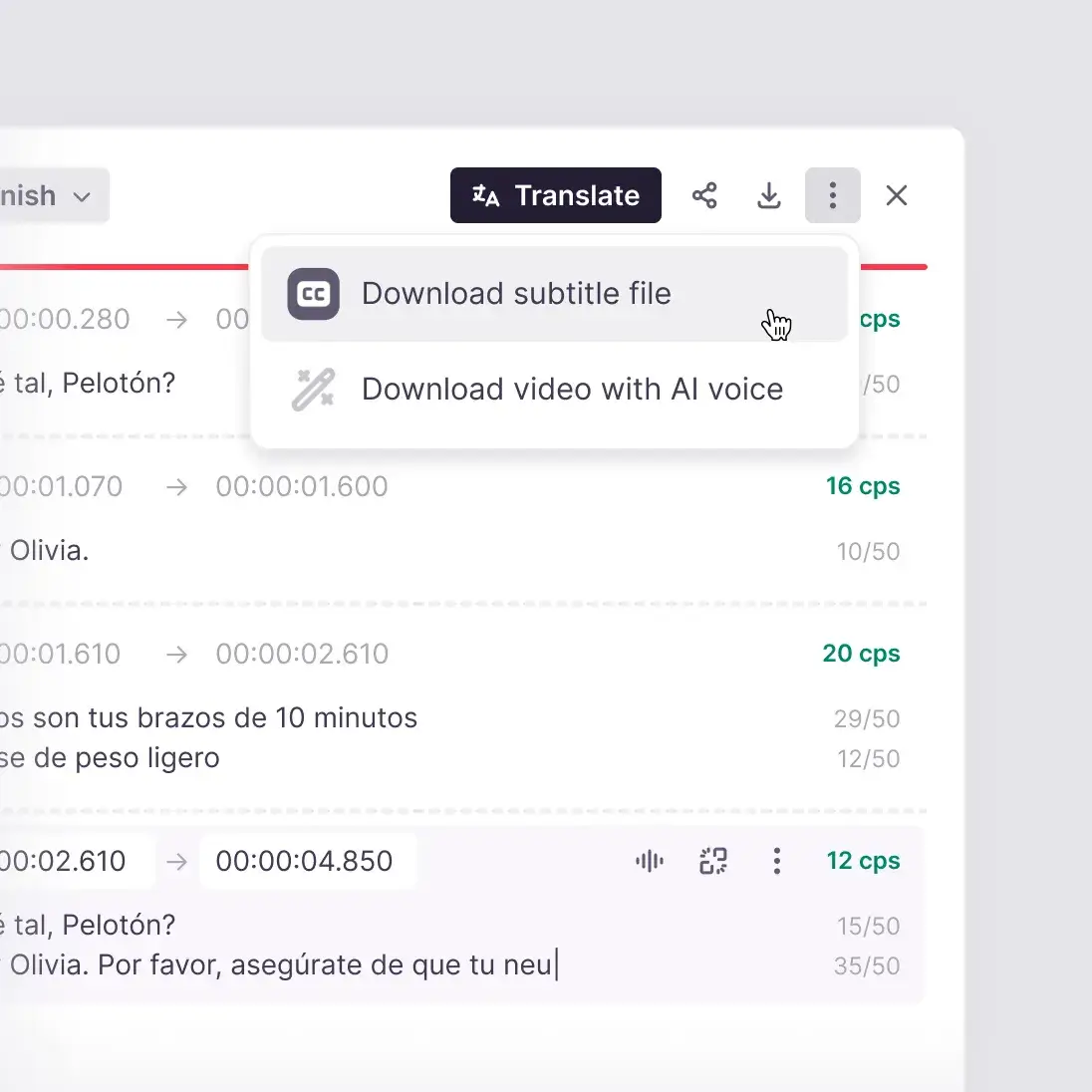
Check subtitles, voice tracks and localized video against the approved script. Play each complete asset to catch timing and context issues.
Deliver and maintain the library
Export in the agreed formats, publish through your usual channels and keep the approved language assets available for future updates.
Quality control starts before the first translation
Clear terminology and review ownership reduce avoidable revisions. Use a glossary for product names and specialist vocabulary, a style guide for voice and audience, and a representative sample to align reviewers before the full library is processed.
Use AI quality assessment to help identify segments that need attention, then have the right person resolve them. Translation assessment is one part of the process: it does not replace watching the final video, checking a spoken pronunciation or testing subtitles in the target player. Explore the Quality Assurance Coworker.
Subtitles, voice-over or dubbing?
Choose the output around how people will watch. Subtitles preserve the original audio and support text-based viewing; voice-over makes narration available in another language; dubbing may require closer treatment of dialogue and performance.
| Your need | Starting option | What to agree before production |
|---|---|---|
| Viewers need translated text | Subtitles | File format, timing, line length and caption accessibility needs |
| Learners should listen while following a demonstration | Voice-over | Voice availability, pacing and pronunciation |
| Dialogue should be replaced for the target audience | Dubbing | Speaker handling, performance and synchronization requirements |
| Text inside the picture must change | Graphics/video editing plus translation | Editable source assets, layout and final compositing responsibility |
Explore subtitle translation, multilingual voice-over and AI dubbing.
Fit video localization into your content controls
Keep access, review and handoff requirements visible from the start. Choose the Smartcat plan and workflow that fit your organization’s needs, including reviewer collaboration and relevant integrations.
Smartcat publishes SOC 2 Type II compliance, encryption in transit and at rest, and a policy that customer content is not used to train public AI models. Its current pricing page lists SSO and additional controls by plan. Check the current plan details and your security requirements before procurement.
The translation platform does not replace your final publishing environment. Test the delivered files in your video player, content system or learning platform and keep a named owner for the final release.
How teams have used Smartcat for multimedia content
Published customer stories show video localization as part of a wider content workflow. These examples describe those customers’ projects, not a guaranteed outcome for every video library.
Kaseya: training available for a global rollout
Kaseya’s case study describes a complete video training series delivered in five languages, alongside its broader product and documentation localization work. Read the Kaseya story.
Intradiem: review across courses and video
Intradiem used Smartcat and Marketplace reviewers for a mixed learning-content program. The published case describes video localization with subtitles reviewed in the editor, together with course and supporting-material translation. Read the Intradiem story.
What determines video localization cost?
Scope the source duration, languages, outputs, review and production work before comparing estimates. A subtitle-only project and a project with new voice tracks and edited graphics require different effort.
Use Smartcat pricing for platform plans and discuss your service requirements with the team. Bring a representative video and delivery checklist to make the estimate specific. No per-minute rate or service-level guarantee is implied without an agreed offer.
Frequently asked questions
What is video localization?
Video localization adapts a video for a particular audience or market. It can include translation, subtitles, narration, on-screen text and cultural or instructional context.
How is it different from video translation?
Translation focuses on the language. Localization also considers how that language works with the visuals, delivery format, audience expectations and publishing channel.
Is Smartcat a video translation company or a platform?
Smartcat provides a platform for AI-assisted content translation, review and collaboration, with access to Marketplace experts. Discuss any managed project requirements with the team so responsibilities and deliverables are explicit.
Can native speakers review the videos?
You can involve your own in-country reviewers or source expert review through the Marketplace. Define whether their task covers text, spoken audio, subtitles, final playback or all of these.
How long does video localization take?
Duration, language count, output types and review rounds determine the schedule. Approve a sample first and agree milestones for the remaining assets.
Which formats can be delivered?
Confirm the available text, subtitle, audio and video exports for your project and the formats accepted by your destination. Review a sample export in that environment before processing the full library.
Can on-screen text be localized?
The text can be translated, but changing text baked into a video may require separate graphic or video editing. Supply editable assets and agree who will replace and check the visuals.
Build a delivery plan around your video library, languages and reviewers
Start with a representative asset and see how the complete workflow fits together.