GDPR-compliant organization
ISO 27001 certified organization
SOC II compliant organization
Translate your ExpressionEngine website with AI
Translate the pages, navigation, and contact flow of your ExpressionEngine site with AI, review the wording in context, and publish the languages your visitors need.
More than 80 of the world’s largest companies have chosen Smartcat
How to add Smartcat to ExpressionEngine
Create a Smartcat website project from your published ExpressionEngine URL and choose the target languages.
Install the generated Smartcat snippet through the shared head template or partial included by your page templates.
Deploy the change and open the published site to confirm the snippet is present.
Review the translations in Smartcat’s visual editor and publish the languages that are ready.
Translate ExpressionEngine pages through the shared template
Add the Smartcat snippet to the shared head template used by your ExpressionEngine pages. In an implementation managed through Developer → Templates, that may be a reusable template partial included by multiple page templates. The actual include structure belongs to the project.
Review the rendered combination of channel fields rather than assuming a field name describes everything a customer sees. A resource page may combine an article title, category label, author information, and a subscription prompt. Keep those elements linguistically consistent while preserving links and non-translatable identifiers.
Smartcat’s website route does not write translated channel entries back to ExpressionEngine.
What changes for visitors, and what stays in ExpressionEngine
The script translates the text ExpressionEngine renders on the published site. It does not create ExpressionEngine language variants or write translated values back into the back office; use the native multilingual model when translated content must be stored in ExpressionEngine.
Review before a language goes live
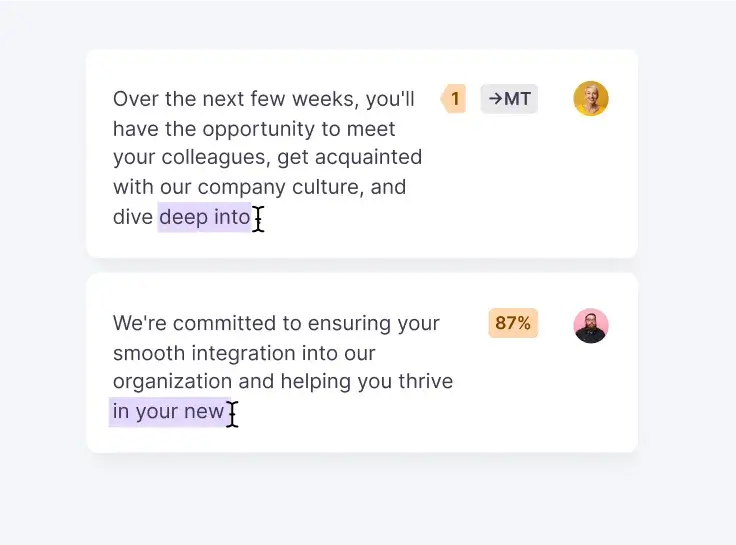
Machine translation gives you a fast first draft. In Smartcat’s visual editor you see each translated string on the page, shorten headings that run long on mobile, and keep product and brand names consistent with a glossary. Assign a reviewer when a page needs approval, and publish only the languages that are ready.
Frequently asked questions
Will adding code to one template cover every page?
Only pages that render that template or include receive it. Check the shared include chain and any separate campaign or landing-page templates.
Can I edit translations before publishing?
Yes. Refine and confirm the wording in Smartcat’s visual editor, then publish the languages that are ready.
What happens when I add a new page in ExpressionEngine?
New text follows the Smartcat project’s selected translation mode. Choose reviewed translations when every new page requires approval; automatic modes can translate newly encountered text. Neither mode changes your source content in ExpressionEngine.
Publish your ExpressionEngine website in more languages
Install the snippet once, review the translations in context, and publish the languages your audience needs. See all website integrations or read how the Website Translator works.