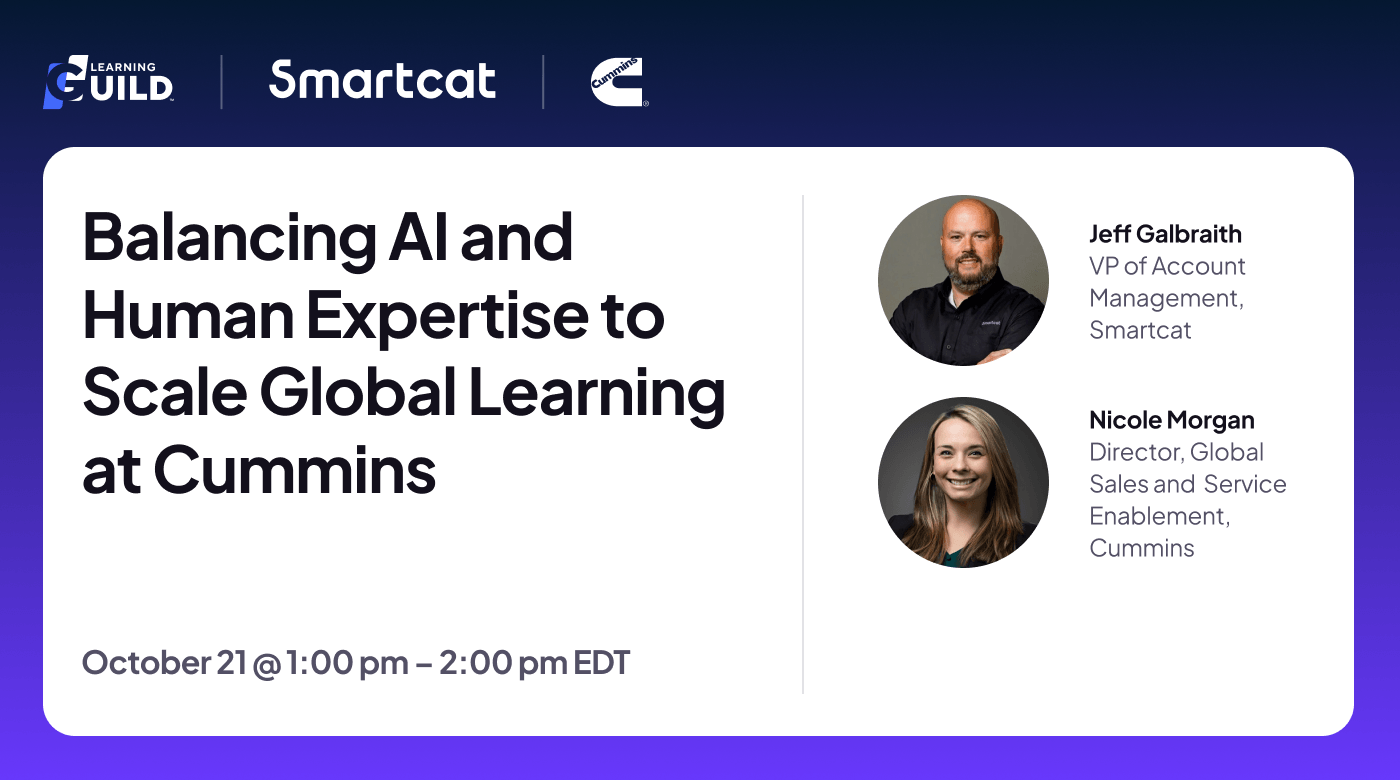
Global training only works when people can access it in their own language. But keeping learning content current across dozens of markets and languages can quickly become a major operational challenge.
Cummins, a global power and technology leader with more than 70,000 employees, built a localization model that combines AI translation with structured human review and technical validation.
Instead of rebuilding courses manually for every language, the team uses AI for repetitive first-pass translation and directs reviewers toward the work that requires judgment, including terminology, nuance, and technical accuracy.
What you'll learn:
What Cummins delegates to AI and where human expertise remains essential.
How the team reduced reviewer effort, saving the equivalent of approximately 48 weeks of review time annually.
How Cummins structured its workflow to improve speed while maintaining a focus on quality and technical accuracy.
Practical lessons for getting started with AI-assisted localization.
You'll leave with:
A working model for dividing translation work between AI and human reviewers.
A framework for scaling multilingual course delivery without scaling reviewer workload at the same rate.
Practical first steps for piloting an AI-assisted localization workflow with your own learning content.